
How do we intervene in a system to have maximum impact?
Systems thinking enables us to understand complex systems, so that we can identify leverage points – the best places to intervene to change the system. In ‘Thinking in Systems’, Meadows outlines key leverage points.
We live in complex, messy socio-ecological systems. Everything is interconnected. Everything is in a constant state of flux. It can be hard to pin the system down and make meaningful changes that have an impact. In the face of the mess and complexity and interconnectedness, it’s easy to feel small and powerless. If you want the system to change – if you know it needs to – it can be hard to figure out where to start. It’s overwhelming.
Leverage points are the places we can intervene in a system to have maximum impact, the places you can put in the least amount of effort to have the greatest effect. Think about the nice, easy feeling of leveraging open a can of paint with a screwdriver, and the satisfying pop as the lid prises open.
In the penultimate chapter of her classic book, ‘Thinking in Systems’, Donella Meadows outlines key leverage points – how and where to intervene in a system to make an impact.
Paradigms

How we perceive the world is shaped by ideas and values. This shared mindset underpins the systems and cultures we live in and create. There are big, unspoken assumptions that we ‘buy into’ without articulating. They are often so ubiquitous that we don’t even notice they are there. We don’t challenge them because we don’t notice them and if someone does point them out, we think the beliefs are normal and perhaps, as a result, immutable. They are an accepted part of society. For millennia in many cultures, slavery was acceptable, owning another person was perfectly normal, not abhorrent. Within living memory, marital rape has been criminalised (although not universally). It is only 50 years ago that women demanded equal pay for equal work (in the UK); before this it was accepted that women would and should be paid less for the same work. Copernicus and Kepler changed the way we viewed the world. As much as anything, it was a mindset shift, that enabled people to understand that the earth is not the centre of the universe.
There are some core beliefs that underpin our current systems. If we want to change this system, we need to change these beliefs. Money measures something tangible and important, so someone’s wealth is a measure of their worth. The self-interested actions of individuals in the market collectively guide the market towards a common good, creating a fair and balanced system. Nature is a stock of unlimited resources to be used for human purposes. Buying things is pleasurable and good for the individual and society.
Paradigms don’t cost money to change. They are the thoughts inside your head. They are the shared thoughts of a culture. They can change. And they do.
So how do you change them? In his seminal work, The Structure of Scientific Revolutions, Thomas Khun suggests persistence is the key. Keep pointing out the failures and anomalies of the old paradigm. Give voice to the people in the new paradigm. Don’t waste time and energy on reactionaries. Instead, focus on the changemakers and the vast middle-ground – the people who are well-meaning, who want to listen and who are open to change.
Stated Goals

Just as we can have shared and unspoken assumptions, we can have goals that we don’t clearly articulate. The goal or purpose of an organisation or society drives it, propelling it towards its destination.
In the humdrum day-to-day struggle to survive and make ends meet (as an individual, family or business), it can be hard to lose sight of the goal. What is your purpose? What is your aim? What do really want from life? What’s important to you? When you are dying and you look back over your life, what will you care about? What will give you most pride?
A business leader may think that the business’s purpose is to make a profit. But, Meadows argues, making a profit is the condition necessary to stay in the game to keep afloat to do the thing you really want to do with your business. It should not be conflated with purpose.
An academic needs to publish papers to keep afloat. But is publishing papers the end goal? Or is it a means to an end? The end goal – the purpose – is understanding and then changing the world for the better. Publishing papers is merely a vehicle to do this. The knowledge contained within the papers and its impact is what really matters.
By reflecting on the goals of our systems, stating and refining and rearticulating our purpose, we can change the system.
Self-Organisation

Diversity is key to change. In natural systems, change occurs through evolution. Small changes are replicated until the species has changed (evolved). Diversity – the small changes and imperfections in replicating the system – the mutations – leads to greater diversity and more widespread changes within the system.
Systems that are tightly controlled centrally are harder to change. Experimentation, variability at small, local scale fosters self-organisation which can lead to new ways of doing things – innovations which may be taken up by others, eventually moving from niche to mainstream and changing the system.
Rules
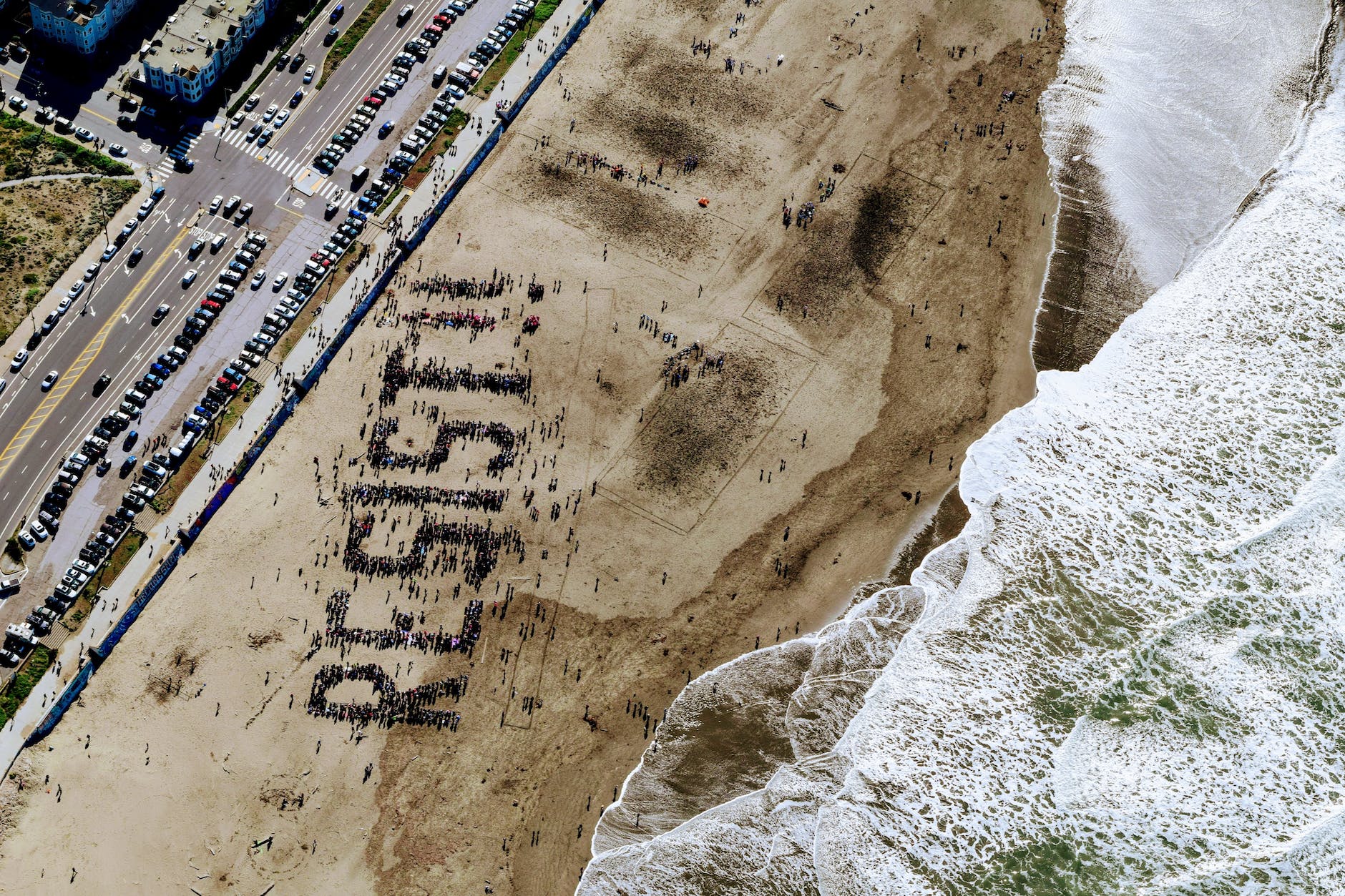
Systems are like games. They have rules. And the rules shape the way the game is played. They define its scope, boundaries and – to some extent – its purpose.
Rules come in many different forms. There are the laws of physics. There are the processes of natural systems which create sets of boundaries. And there are the rules of our social systems. Some of these are unspoken and culturally specific. Wait till everyone’s ready before you start eating. It’s rude to talk with your mouth full. Say ‘please’ and ‘thank you’. Some rules are formally articulated through legislation with clear penalties for transgression. Some rules come in the form of guidelines or recommendations. Eat five fruit and veg a day. Aim for 10 minutes of brisk walking each day. Some rules are enforced through punishment. Some are encouraged through incentivisation – subsides to encourage farmers to manage their land in environmentally friendly ways.
To understand the importance of rules, think of a game you play. Any game. Any system in which you are involved – your family, your office, your business, school, college, local club.
Identify the rules of the game. What are the informal expectations? What are the policies? How are these encouraged and enforced?
Now, imagine different rules. Mum and Dad are no longer expected to shop and cook for their children. You can work whatever hours you like, get paid as much as you want. Teachers aren’t expected to mark students’ work or give feedback. You can play whatever instrument you like in your local orchestra – a different one each week if that’s what you want.
See how quickly the system changes. The interactions between individual parts in the system change. The system is not the same anymore – the family, business, college and orchestra – are now fundamentally different.
Change the rules and you change the game. Change the rules and you change the system.
Information Flows

Clear communication can have deep impacts on behaviour. Meadows gives a great example of a Dutch housing development. All the houses were fitted with electric meters, so that residents could monitor their electricity consumption. Some of the residents used 30% less electricity than others. Why? Because the meters in these homes were fitted where they could easily be seen – the front hall, rather than the basement. Clear lines of communication radically changed behaviour.
Missing information flows is one of the most common causes of system malfunction. Externalities can be seen as gaps in information flows. We don’t see the consequences of our actions. The information does not get back to us quickly enough or in a form that we can process. Its easy not to think about the social and environmental impacts of a T-shirt that costs £2.50 or a burger that costs half that. We’re dissociated from these impacts because of the way information flows through our system. We don’t feel accountable.
The information we receive is determined by who controls the information flow. Control the information, change the flow and behaviours change and the system shifts.
 Wylder Earth
Leave a comment